Monday, July 03, 2006

Classics of Conservatism - Part XVII - Herman Dinsmore - All the News that Fits

Click here and here for previous editions of Classics of Conservatism.

This month's edition of "Classics of Conservatism" is topical, as it provides background into the history of bias at the New York Times. The blogswarm that now engulfs the Times and has MSM/DNC apologists scrambling to defend the indefensible relates only to the tip of the iceberg.

Herman Dinsmore was a Times employee for 34 years, including 9 years as international editor. In 1969, he drew on his years of experience to chronicle the Times' bias and misleading reporting on a number of issues.


Much of what we think we know of Vietnam is the result of years of NYT propaganda that has found its way into the history books because the historians naturally looked to the "paper of record" when compiling their stories. Dinsmore's book exposed the journalistic malpractice that contributes to that "history" and allows us to rethink this and other episodes.

Dinsmore also writes extensively about the Warren report and how the Times blindly accepted its conclusions despite its obvious flaws.

I cannot remember much of the book (and the other subjects it explores), as it has been more than 17 years since I read it. But I believe that simple "bias" is no longer enough to explain the decades of 5th column activities by the Times and the rest of the MSM/DNC.

In 1969, Dinsmore's book was only one isolated voice being drowned out by the MSM/DNC chorus. Today, it seems almost quaint and unexceptional, given all that we know about the NYT and the new media's power to expose it. But the real value of "All the News that Fits" is the confidence is gives us in our own observations as we uncover the true depths of New York Times' and MSM/DNC perfidy.
--------------------------------------------
update - photos from today's protest at the Times' office in Washington D.C. - H/T Michelle Malkin

Labels: , , , ,

Monday, January 28, 2008

Classics of Conservatism - Part XXII - Phyllis Schlafly - A Choice Not an Echo

Previous classics of conservatism.


1964


One disadvantage from which conservatives have suffered for many years has been the need to re-learn recent history over and over again. This problem exists because young conservatives have no way of learning about the past due to the liberal bias of modern education. Modern schools teach that conservatism has no history or core philosophy other than a legacy of racism, oppression and war. Students have no idea that there is a philosophical basis and historical context for such ideas as free markets, lower taxes, national sovereignty, etc.

Students and recent graduates, if they are interested in politics at all, will tend to think only in terms of the headline-of-the-moment instead of the broader context into which an election fits. Younger voters think they are discussing "the issues" if they debate how much government interference in health care is best, how to address "global warming," or what to do about high gas prices.

At the same time, younger conservatives who cannot remember the 70's, 80's or 90's are susceptible to many ideas that would be contradicted by a little memory of recent history. One such idea is that "moderate" Republicans are somehow more electable than conservative Republicans. We are supposed to believe that "independents" will spring out of the woodwork to support a moderate Republican instead of the Democrats' liberal nominee. And this is where we must reinvent the wheel. If new conservatives could remember Gerald Ford, Bob Dole, George Bush I, Ronald Reagan, etc., they would not fall prey to this kind of propaganda. Prior to the new media, there was no way for conservatives to educate each other or pass on the lessons of the recent past. We had to rely on a conservative newspaper columnist whose column appeared once a week or an old book or some other rare source of conservatism to provide an irregular trickle of information that wasn't filtered through the MSM/DNC.

Today, we can transmit facts, history and perspective much more quickly through the new media, especially if such facts include some of the old material that the MSM/DNC used to be able to suppress.

One such treasure trove of facts is found in Phyllis Schlafly's 1964 paperback, "A Choice Not an Echo." In Choice, Schlafly breaks down each Republican primary battle from 1936 through 1960 and shows how establishment Republicans (those with ties to the publishing and banking world) had undermined the choice of the rank-and-file Republicans with false charges (spread through an obliging MSM) of "extremism" and "unelectability."

Among my favorite chapters is Chapter 6, in which she discusses polls - "Pollsters and Hoaxsters" (1944):


The New York Kingmakers realized they could not capture the 1944 Republican nomination either with Wilkie or with the same type of last-minute blitz they had used in 1940. This time they went into action earlier. They discovered and developed a new political weapon: the Gallup Poll. Dr. George Gallup began asking a lot of questions of a very few people, and - funny thing - he usually came up with answers that pleased the New York kingmakers.
The Gallup Poll has been used repeatedly as a subtle propaganda machine to sell the Republicans on the false propositions that the GOP cannot win unless it (1) continues the New Deal foreign policy (Soviet appeasement - Salt) and (2) names candidates who will appeal to the left-leaning Democrats and liberals.
p. 45

A Choice Not an Echo sold millions of copies and was instrumental in wresting control of the GOP back to the grassroots. Even though Barry Goldwater lost by a wide margin that year, the Goldwater coalition was born that year that eventually swept Ronald Reagan into office. As a result of the grassroots organizing efforts and the distribution of various short books such as Choice in 1964, a movement was born. Richard Nixon, despite his faults, was elected in the next two elections by the same coalition. Niether Nixon nor Reagan won by appealing to moderates. [Nixon didn't sell out conservatives until after he was elected.]

Schlafly identifies the people she refers to as "kingmakers." They have a lot in common with the Republican "moderate" kingmakers of today.

In 2002, Ann Coulter wrote about Phyllis Schlafly and Choice:


About the time a young Hillary Rodham was serving as inspiration for the perfect little girl in the Hollywood thriller "The Bad Seed," Schlafly was remaking the Republican Party.

In 1964, Schlafly wrote "A Choice, Not An Echo," widely credited with winning Barry Goldwater the Republican nomination for president. The book sold an astounding 3 million copies. (The average nonfiction book sells 5,000 copies.) Goldwater lost badly in the general election, but the Republican Party would never be the same.

Goldwater's nomination began the retreat of sellout, Northeastern Rockefeller Republicans who hoped to wreck the country with slightly less alacrity than the Democrats. Without Schlafly, without that book, it is very possible that Ronald Reagan would never have been elected president.

For the record, I read my copy of A Choice Not an Echo years before I had heard of Ann Coulter, but many years after the book was published. Original editions of the book were still floating around in the 1980's just as they are today. I promote the book now because it is an election year and Republicans face a choice regarding who to nominate. The cries of "electability" ring throughout the land, as we are told to support John McCain by the MSM/DNC.

Moderates bring the GOP to defeat. The Independents or "undecided" voters are nothing but liberals who are too embarrassed by the Clintons, Jimmy Carter, Al Gore et al. to call themselves Democrats. Such voters did not abandon the Democrats to elect Gerald Ford or Bob Dole and they will not help John McCain in 2008. Instead, they will give us Barack Obama, especially if we provide nothing more than an echo.


------------------------------------
update - January 30, 2007 - See Michelle Malkin today for a preview of how this fall's election will turn out like so many of those discussed in A Choice Not An Echo.

Labels: , , , ,

Thursday, November 24, 2005

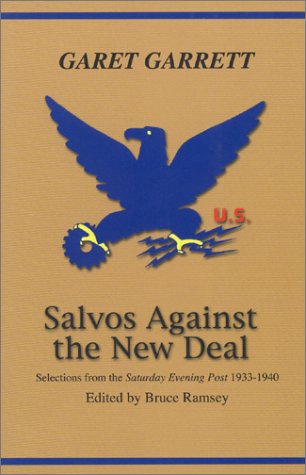
Classics of Conservatism - part XIII - Garet Garrett - Salvos Against the New Deal

Click here for previous editions of Classics of Conservatism.

This month's Classic book recommendation has been featured on the sidebar since the early days of this blog. "Salvos Against the New Deal" is one of several books featuring compilations of the writings of Garet Garrett. [I first recomended one of Garrett's books in December of 2004.]

[Click here for my Garet Garrett blog.]


"Salvos Against the New Deal" features a compilation of Garrett's articles from the Saturday Evening Post from 1932 through 1940. This compilation was edited in 2002 by Bruce Ramsey, today's leading expert on Garet Garrett. As I wrote at the Garet Garrett blog:
Garrett was an early to mid 20th century conservative writer whose books and articles challenged the New Deal policies of Franklin Roosevelt. He also did much more than that. As a novelist, essayist and editor for the Saturday Evening Post, Garrett provided a remarkable advocacy of capitalism and freedom.

"Salvos" is important for many reasons, not the least of which is that the rediscovery of Garrett's works signals possibly the end of a long retreat, during which conservatives have refused to challenge the basic assumptions underlying the New Deal. Conservatives have tried to challenge leftist policies on the basis that they were not "practical" or that today's policies go beyond the original intentions of the New Deal creators (e.g. the Social Security debate).

But Garrett challenges the original New Deal policies themselves. He gives conservatives reasons to be proud of their conservatism, especially when it comes to domestic policy.


"Salvos" provides a clear picture of how our government came to be ruled by bureaucrats and how Congress surrendered its constitutional authority to these unelected rulers.

Almost as importantly, Garrett provides descriptions of some of the labor battles of the 1930's. We can see the roots of how unionization eventually brought down the American automobile industry and the steel industry. The fruits of these battles loom large over our lives today.

Garrett prophetically discusses the New Deal's exercise of pharoah-like powers in building the pyramids of our time.

Most importantly, Garrett describes what the government did to our money. No domestic policy can be rationally discussed without understanding what money is and how government manipulates and destroys its value. [And the best part is, the discussion is written in layman's terms and is quite gripping.]

Once I discovered Garrett's writings, I discovered that any attempt to discuss modern economics, government, spending, taxing, regulating, business, etc. is useless without the background that Garrett gives us.

Labels: , , ,

Friday, February 29, 2008

Classics of Conservatism - Part XXIII - The Secret of the League

Click here for previous Classics of Conservatism.

This month's classic is The Secret of the League, by Earnest Bramah. Secret celebrated its 100 year anniversary in 2007.

1907 (1995 edition)


Secret of the League is one of three old novels that I refer to as "Ayn Rand relics." Together with The Driver (1922) and Calumet K (1904), Secret provides clues as to the origins of Ayn Rand's later novels.


Secret of the League takes place between 1915 and 1918. Being written in 1907, the book has nothing to do with World War I. Instead, Bramah writes of the takeover of the English parliament by socialists, who immediately pass extreme socialist legislation.

(click to enlarge)


Secret dramatizes the creative solution adopted by Salt, the main character, and his friends. The solution is unique and is not beyond the reach of ordinary individuals.

I first read this book in 2004 just before I began blogging (the main character's name and the year of publication inspired my screen name). I describe Secret here because it begins to appear that we may need some unique alternative (and I don't mean a third party candidate) as a result of this year's election. The candidates for President in 2008 appear poised to expand the already unsustainable entitlement programs, increase taxes and choose judges that have no inclination to recognize the government's true constitutional limitations. Our thinking will have to be creative as we face a long era of darkness at the hands of an increasingly socialist government.


The book is far more than a "how to" manual. Secret provides a humorous look at socialist government, pandering politicians, union political pressure and other such plagues. We read with amusement as leftist government officials find themselves helpless as their spending programs leave their government destitute and powerless.

Regardless of whether we implement Salt's ideas, the fate of the government in Secret may well be the fate of our own government. Our own government may collapse under the weight of unsustainable entitlement programs. The only question is "when?" In Secret of the League, Salt and his allies merely found a way to make sure that a large faction of the country was ready to pick up the pieces when the collapse arrived and to remove from office those who were responsible for the debacle. If we do nothing, we will be helpless when social security, medicare, (reparations ??) et cetera drive government and the financial markets to ruin.

I do not reveal specifics of Salt's actions so as not to spoil the plot. For those that have read Atlas Shrugged, Salt took a different course than Galt. Salt's plan required less technology, less cooperation from powerful individuals and less disruption of the lives of his allies. But Salt's plan clearly foreshadowed Ayn Rand's theme in Atlas. Ayn Rand made the plot better and more comprehensive, added her own ideas and provided more thorough philosophical justification for the actions of the heroes [although Bramah provides a fair amount of philosophical justification as well]. There is no dialogue or language from Secret that was repeated in Atlas. Salt's plot in Secret is enjoyable in its own right and also because the reader will recognize the seed of Ayn Rand's story from a half century later.

The few technological aspects of the book provide for additional enjoyment, as the reader will recognize a crude precursor to modern day faxes and e-mails. Bramah also anticipates the ease and availability of modern air travel, but in a different form. Air travel was in its infancy when Bramah wrote Secret of the League.

If nothing else, Secret of the League will help the reader understand that socialism is not inevitable, invincible or irreversible. The book will further reinforce other writers that have opposed socialism and modern politicians that warn of the conseqences for ourselves if we allow the government to continue on its present course.

Labels: , , ,

Sunday, October 23, 2005

Classics of Conservatism - part XII - Robert Ringer - How You Can Find Happiness During the Collapse of Western Civilization

Click here, here and here for previous Classics of Conservatism recommendations.

This month's Classic of Conservatism book is Robert Ringer's "How You Can Find Happiness During the Collapse of Western Civilization."

1983


Imagine the scenarios that confronted the United States in the late 1970's and early 1980's. We had faced double digit inflation and high unemployment for years. We had endured government created energy crises, foreign policy crises and social upheaval. We faced the loss of our basic industries, such as automobiles, steel and other manufacturing sectors. All of the conditions that swept Ronald Reagan into the White House were fresh in our memories.

These events were not mere inconveniences. The loss of our basic industries and the ongoing economic and social collapse caused many of us to doubt whether the United States would survive. Had Reagan not been elected, I shudder to think what further calamities would have befallen the United States in the 1980's.

But recent events prove that Reagan's election, while helpful, did not permanently resolve the issues that have plagued our country for the past generation. We merely forgot about them for awhile as a new generation of Democrats and leftists sought to return us to their paradise known as the 1970's. As Ringer writes on page 171 (hardback edition):
Human beings are a strange lot. They will scream bloody murder when subjected to discomfort, yet, within a short time of being relieved of their misery, will show little or no interest in devising ways to avoid such discomfort in the future.

Ringer goes on to describe how Americans have failed to prepare for shortages, civil unrest and a host of other serious problems.

Since the publication of "Collapse", numerous American cities, including Los Angeles, New York, Washington, D.C., New Orleans, Houston and Toledo have been temporarily paralyzed by civil unrest, foreign attack, natural disaster or some combination thereof. I chose "Collapse" as this month's book recommendation because so many of these events have occurred recently. The television scenes of mass evacuation, chaos and violence are so unnecessary for those who are prepared for government failure and are not afraid to take steps to protect themselves.

Ringer proposes solutions that each of us can undertake without waiting for others to help us or for the government to adopt one policy or another. Ringer discusses everything from investments to choosing where to live to choosing an occupation (or hobby) that will provide a second skill. The book remains relevant even after more than 20 years.

The number one question in our minds as we watched the recent evacuation of Houston on TV centered on the ability of the government to deal with future crises, including the possibility of a nuclear suitcase bomb. A DHS official was asked (on Nightline) what the government would do in the event of a nuclear attack in a major city. He could not provide an answer other than to say that the Department was learning from the Houston crisis.

That is not good enough. Ringer provides many steps for you to protect yourself without relying on the government. The first such step is to read "How You Can Find Happiness During the Collapse of Western Civilization."


--------------------------------------------------
visit counter added on March 28, 2007


Labels: , , , ,

Friday, September 30, 2005

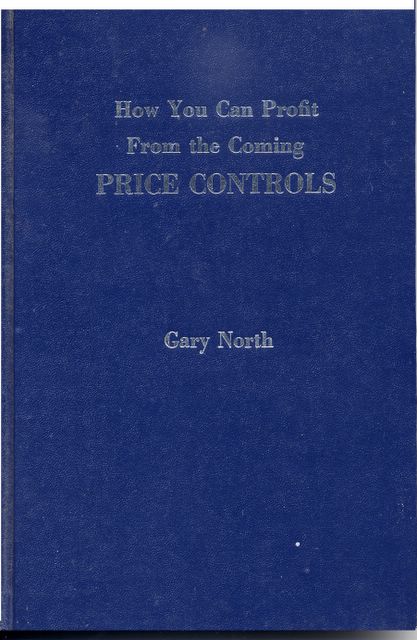
Classics of Conservatism - part XI - Gary North - How You Can Profit from the Coming Price Controls

For previous editions of "Classics of Conservatism," click here.

With the steady rise in gasoline prices over the past year (or more), we are starting to hear more talk about prices controls from state and federal politicians. I wrote earlier about proposed measures that would limit the ability of gasoline prices to rise during an emergency. Even these measures create shortages, long lines and the potential for panic.

There is a phrase we must remember in the event that politicians are tempted to impose price controls in the future -

"Price controls cause shortages."

I dug out of my collection a copy of a book that was written in 1980 - near the height of the last government created gasoline "crisis".

1980


Gary North makes the case against price controls in a way that is understandable and entertaining for the average reader. North's predictions of new price controls have not come true on a grand scale, but it is only a matter of time - unless some of our politicians start standing up for principal. In fact, it was the election of Ronald Reagan in 1980 and his termination of the fuel price controls that eased that era's gasoline "crisis" and delayed the day when North's fears would come true:
The response of politicians to price inflation has been the same for 4500 years: impose price and wage controls. This will be the answer again.
(page 3)

North provides examples in which the government is determined to ignore the laws of economics in order to accomplish its goals. North quotes Senator Proxmire (D-Wi.)[from 1976 hearings on the future of Social Security]:
. . . [W]e have the power to provide that money [to Social Security beneficiaries]. And we are going to do it. It may not be worth anything when the recipient gets it, but he is going to get his benefits paid.
[emphasis added]

North's "Price Controls" book describes the consequences of the federal (and state and local) government's attempts to provide money that "may not be worth anything." [North goes on to expose the myth that government pension funds in general (and social security in particular) are somehow solvent.]

Remember that this country has endured runaway inflation during our lifetimes, most recently in the 1970's. The Nixon administration responded with wage and price controls in the early 1970's - before the gasoline "crisis" even started. Those controls violate the law of supply and demand and always result in inevitable shortages.

North's title is somewhat misleading. No one will "profit" from price controls. But the controls and the inevitable shortages can be endured. North provides various strategies for the average person to obtain the items he needs and maintain his standard of living despite government created shortages.

The real purpose of the book - and my purpose in bringing it to your attention now - is to prevent price controls from ever being imposed. Politicians believe that we have forgotten the 1970's. They believe they can repeat the mistakes of that decade without consequence. If we recall the lessons of that decade now, we might yet prevent the government from making the same mistakes.

Gary North's book serves as a reminder of how this country nearly came apart in the late 1970's. There was little reason for optimism in the early 1980, as we entered our second straight year of double digit inflation, seemingly endless energy problems, mounting foreign challenges in Iran, Afghanistan (and elsewhere) and a President (Carter) that could do little more than blame Americans for "malaise."

One can find numerous books from the late 70's and early 80's that addressed this doom and gloom environment, most of which made ominous predictions and recommended self-reliant actions on the part of individuals. These books were part of the backlash that swept Reagan into office. Only by rediscovering how badly the government can mess up the economy (and everything else) will we avoid the need to implement some of North's recomendations in our own lives.

Labels: , , , , ,

Saturday, August 20, 2005

Classics of Conservatism - part X - Thomas Sowell - Personal Odyssey

Click here for previous editions of "Classics of Conservatism."

This month's "Classic of Conservatism" is Thomas Sowell's "A Personal Odyssey." Thomas Sowell is known to millions of readers as the conservative newspaper columnist who appears weekly across the country in many cities as well as twice weekly at various internet sites. We also hear him occasionally on the Rush Limbaugh program.


Personal Odyssey introduces us to a different side of Dr. Sowell. We learn of his childhood, his education and his early career. I have enjoyed many books. But this one is one of the few that I had a very hard time putting down.

I especially recommend this book for anyone about to enter college, as we learn much of the unpleasant side of academia, including dishonesty of administrators, low standards and political intrigue. Dr. Sowell shares his experiences as a student and economics professor at various colleges and universities, including Cornell, UCLA, Howard, Harvard and the University of Chicago (among others).

Sowell also recounts his experiences with the Ford administration, the Reagan campaign and the Bork hearings. Sowell's experience with the Bork hearings provide particular insight into what we can expect in future nomination fights.

The book is composed mainly of relatively short vignettes, all of which combine to make a compelling story. Dr. Sowell points out that he has lived during almost one third of this country's history. His observations provide new insight for much of that history. Dr. Sowell has come as close to anyone about which I have read to living the life of Howard Roark.

For previous discussions of Personal Odyssey, click here (late talking children) and here (a CBS news lie).

Labels: , ,

Tuesday, June 21, 2005

Classics of Conservatism - part viii - Mainspring of Human Progress - Henry Grady Weaver

Click here for previous editions of "Classics of Conservatism."

7th printing - 1965


This month's "Classic of Conservatism" answers some questions central to the nature of civilization itself:
For 60 known centuries, this planet that we call Earth has been inhabited by human beings not much different from ourselves. Their desire to live has been just as strong as ours. They have had at least as much physical strength as the average person of today, and among them have been men and women of great intelligence. But down through the ages, most human beings have gone hungry, and many have always starved.

In "Mainspring of Human Progress," Henry Grady Weaver contrasts the vast majority of human history with the modern western world - and in a way that may surprise you. Weaver weaves today's economic and political questions into their proper historical framework. And he does it all in a pocket paperback that originally cost 95 cents.

Weaver writes about socialism and statist government. But mostly he writes in depth on the "revolution" that is the American way of life. And by revolution, he does not mean the war that was fought in 1776. He means an entire way of thinking that places the individual at the forefront. He describes how individualism leads to industry and economic growth - how the inventions of Jacob Newton, John Deere and Benjamin Franklin flowed from this country's emphasis on individualism. Prosperity does not just happen. It certainly is not inevitable with the passage of time. It happens only when the individual is free to pursue his own ideas and keep the fruits of his labor.

"Mainspring" is an easy read and a refreshing break from the partisan nastiness and memorized talking points that permeate today's politics.

Friday, October 03, 2008

Classics of Conservatism - Part XXIV - America's Great Depression

This month's Classic of Conservatism is Murray Rothbard's 1963 work, "America's Great Depression."


25 years have elapsed since I read this book, but I will never forget its main lesson (and that of the other Austrian economics books I read at that time). The Depression of the 1930's was caused by the alternating periods of expansion and contraction of the money supply by the Federal Reserve Board. The Federal Reserve, under the leadership of Benjamin Strong (Governor of the Federal Reserve Bank of New York) began a long credit expansion in 1922. This expansion continued until the summer of 1929, when the FED reversed course and began contracting the money supply. Several months later, the stock market crashed. The stock market crash is typically considered the beginning of the Great Depression. In fact the Depression had its roots at the beginning the 1920's. (I am somewhat fuzzy on the dates due to the time elapsed since I read the book.)

MSM/DNC mythmakers usually assign the crash of October 1929 as the beginning and attempt to address stock trading practices as the cause. They have convinced generations of students that the activities of a few stock traders somehow caused the collapse of the entire economy. The "historians" ignore the role of centralized credit expansion on the entire economy over a period of years. The term "fractional reserve banking" never appears in print in today's "newspapers."

Instead of focusing on the period from 1922 through 1929, the establishment mouthpieces have caused the average reader to focus on the activities of a few stock brokers at the very end of the great credit expansion. Even conservatives who try to explain the issue in terms of FED policy blame the FED for contracting in the summer of 1929 instead of blaming the FED for creating the bubble over the course of a decade.

If fractional reserve banking did not exist, the economy would not grow nearly as fast as it has during the various bubbles of the 20th (and 21st) century, but the inevitable collapses would not have occurred either. Growth would be slow, steady and safe. We need not fear the crises that have plagued our economy on a regular basis since 1913 (and the inevitable and predictable crisis that now threatens to destroy the economy completely).

Rothbard is one of the few writers to explain the Depression in terms of the 1920's credit expansion instead of the non-issues that the most writers and teachers focus on. In Rothbard's book, you will not read first hand accounts of bread lines and soup kitchens. Nor will you see a rehash of such events as the "bonus army" or the creation of the WPA. These events were the results of the policies that created the Depression. Most writers focus only on these results and teach nothing about the causes.

Rothbard explains the business cycle theory and its application to the credit expansion of the 1920's.

We all acknowledge that today's crisis results from bankers making bad loans to unqualified individuals. But very few have bothered to ask why so many lenders made these mistakes at the same time. This is the question that Rothbard asks in America's Great Depression. Like anyone else, businessmen will make mistakes (and usually pay the consequences). But the business cycle over the past century features all businesses making the same mistakes at the same time. Whether these mistakes include risky lending, overproduction, investment in unprofitable lines, overspending, etc., the mistakes are coordinated throughout the economy and are not limited to one region or one city or one sector. Rothbard shows that this phenomenon occurred even in the 1920's - well before today's "global economy" existed. The one factor that tied all of these errors together was Federal Reserve policy. And Federal Reserve policy has served this function in every recessionary cycle since the FED was created in 1913.

If you are not sure of the extent of misinformation that relates to the Depression, ask a friend if he knows when the Federal Reserve Board was created. Far too many people will say that the FED was created by FDR as one of his many reforms following the stock market crash. Only when one realizes that the FED existed 16 years before the stock market crash will one see an example of how common beliefs about the Depression and economic conditions have become so muddled.

Rothbard provides detail and documentation to demonstrate where the blame truly belongs. After reading America's Great Depression, you will realize that today's crisis was inevitable decades ago and that modern policies and "solutions" will only make the problem worse.

For further reading on the business cycle and the role of a central bank, see Ludwig von Mises' "Theory of Money and Credit." For more history of the Depression and how it related to credit policies following the creation of the FED, see Garet Garrett's "Bubble that Broke the World."

Labels: , , , , , ,

Tuesday, February 28, 2006

Classics of Conservatism - part XVI - Ayn Rand - Philosophy: Who Needs It

Click here for previous editions of "Classics of Conservatism."

This month's "Classic" is Ayn Rand's Philosophy: Who Needs It.

Philosophy is a compilation of articles that first appeared individually in the early to mid-1970's. Don't let the title fool you. Rand did not oppose the concept of "philosophy." In fact, the entire volume argues in support of philosophy's contribution to civilization, freedom and prosperity. Rand repeatedly stated throughout her life that true happiness was impossible without a firm grounding in philosophy. (Recall that most of the heroes of Rand's Atlas Shrugged were either students or professors of philosophy.)

But she did not dwell on the incomprehensible concepts that pass for philosphy in modern universities.

1982


Instead, she presented a simple, logical view of mankind that is attainable by each of us.

My favorite chapter is #6, "An Open Letter to Boris Spassky." Spassky was a world famous Russian chess champion. Rand's "letter" challenges Spassky - and the reader - to imagine chess if the rules of collectivism (whether one calls it socialism or western liberalism) governed the game. I first read this chapter (and the book) in 1989 and I have never forgotten it.

Some of the chapters also provide history lessons for those of us who are too young to remember the early 1970's (or who have heard only the MSM/DNC version of those years). Chapter 12 uses Allende's Chile as an example of the failures of collectivism. Rand's commentary is refreshing for those of us who are tired of hearing Allende referred to as a martyr.


While Ayn Rand is famous for her fiction works, the non-fiction compilations, such as Philosophy, provide entertaining, thought provoking, timeless insight into man's struggle against collectivism.

Thursday, May 19, 2005

Classics of Conservatism - Part VII - Fahrenheit 451

Click here for previous "Classics of Conservatism."

Today's classic book recommendation is Ray Bradbury's "Fahrenheit 451." Although I would bet that Bradbury would not call himself a conservative, he contributed greatly to conservative thought with his vision of future tyranny. The plot describes a world in which the firemen are required to start fires instead of put them out. The fires they must start are intended to consume whatever books are reported or found in private hands.

Fahrenheit 451 stands against modern PC culture, which turns every controversial thought into something bland and innocuous. To me, "451" shouts a loud "no" in the face of every self-proclaimed "moderate."

The MSM/DNC is many things, but one of its main functions is to act as a giant censor against dissenting opinions. Most of our discussions of MSM/DNC bias involve some attempt by the MSM/DNC to silence or ignore and distract attention from some dissenting viewpoint.

McCain-Feingold, attempts by the MSM/DNC to stifle the blogosphere, and long-running attempts by MSM/DNC to silence all competing and dissenting voices appear chilling in the context of "451."

As Bradbury writes, "There is more than one way to burn a book. And the world is full of people running about with lit matches."

First published book length in 1950


[I don't remember where I read this, but Bradbury was quite critical of that propagandist that produced Fahrenheit 911 last year.]

"451" was one of several "negative utopia" books that were published in the wake of the worldwide socialist revolution in the middle of the 20th century. Books like 451, Brave New World, 1984 and Anthem projected the world of the future where creativity was stifled, all economic decisions were made by the government and the concept of self was completely eradicated. Taken together, they provide a powerful indictment of the direction in which MSM/DNC has taken and would continue to take America.

Thursday, May 31, 2007

Classics of Conservatism - Part XX - Boomsday

Click here for a previous Classic of Conservatism.

We have been told for generations that social security is insolvent or will soon be insolvent and/or will run out of money someday. We have watched as one Republican president after another has proposed some solution, only to see that solution quickly shot down in a hail of demagoguery. We watch every election cycle as the MSM/DNC tries to frighten seniors into believing that the Republican candidate has a secret plan to cut/deny SS benefits. The social security system started as an illegal ponzi scheme. The political process has turned the system into a parody of itself.

Most of us have known these things for years (unless you trust the government to take care of you in your old age). But now we have something else to keep the social security issue in perspective - a new novel and a new word. "Boomsday" is the name of both the novel and a deadline. Boomsday is the day when baby boomers begin retiring with full benefits to be paid by the next generation. While it is not clear that the disaster will begin immediately upon the retirement of the first boomers, it IS clear (from the novel and from our own knowledge of economics and common sense) that the fuse will be lit on that day and will quickly burn to its inevitable conclusion.

more than just a novel


Boomsday the novel is set against the backdrop of the financial consequences for the United States government and the economy. The novel describes the actions of one principled person with a catchy name who fights back using her even more appropriately named blog.


The reader is treated to stories of riots on golf courses in protest against the boomers' easy retirement lifestyle at the expense of later generations. The reader is further presented with the main character's unique and imaginitive proposals for rescue of the SS system. We share her dismay as her main proposal is compromised away, despite retaining the same name and form.

"Boomsday" is not simply a dry novel filled with statistics and grim warnings. The book is filled with wit and humor and even some fast paced action. As the characters race toward the climax, the reader detects a hint of a John Grisham story.

Boomsday is about more than simply the collapse of social security. Boomsday is about Presidential and legislative politics. The politics and the humor take the story a little far afield of its original mission. The author's antipathy to the "Christian Right" is also misleading and distracting. The book is filled with salty language, probably in an attempt to attract younger readers to find out about their impending fate.

The book is to be celebrated for reminding us of the war in Bosnia, which still occupies American forces and serves as a symbol for so much of what is wrong with our government and its policies.


[The above images do not actually appear in the book (there are no illustrations), but they demonstrate some of the major plot points that guide the story.]


But the most important function of the book is to jump start the discussion of the disaster that awaits us when SS can no longer survive in its current form. The book, much like the main character, seems to want only to begin a "dialogue", during which presumably more Americans will realize the grave danger with which we are faced. The book fulfills that role.

Coining a term that will serve to remind the audience of the impending SS crisis is crucial. With the use of the term "Boomsday", we now have a word that will shorthand the concept and aid our discussion. For too long, the MSM/DNC monopoly not only provided misinformation on key issues, it also prevented any discussion of key issues by refusing to discuss or even identify key ideas or problems. The imminent collapse of SS is one of those concepts. The one word identifier - "Boomsday" - now allows us to warn of the impending Boomsday just as the word "9-11" allows us to warn of future terrorism in our cities.

I recommend the book, but, more importantly, I recommend the word.

---------------------
update - I have updated the photos above.

Labels: , , , ,

Wednesday, July 20, 2005

Classics of Conservatism - part IX - "Blog" - Hugh Hewitt

Click here and here for previous editions of Classics of Conservatism.

I just read "Blog" this month and discovered numerous items that increased my appreciation of the blogosphere.

Click here, here, here, here, here and here for previous posts referencing this book.


- Hewitt provides a brief history of Rathergate and other blogosphere milestones.

- More importantly, Hewitt discusses ways that each of us can use the blogosphere as a business model or to promote our hobbies, school, church or other organization.

- Hewitt acquaints the reader with the concept of "swarming."

- Hewitt shows how the blogosphere, Rathergate and related events are just as momentous as the Reformation.

- Hewitt shows how blogs can be useful in the coming Supreme Court battle (pp. 103, 148).

Throughout the book, the reader obtains a strong sense of the historical nature of today's events, particularly media related events.

On page 171, Hewitt discusses a topic that I cover as #21 in the bias categories list - White Noise - the habit of the MSM/DNC to discuss irrelevant topics so as to distract attention from the real issues of the day. Hewitt goes into some depth on this phenomenon and uses it to explain some of the blogosphere's success.

On page 216, Hewitt quotes one of his reader's accounts of a Dan Rather episode from the 1980's, in which Rather claimed that an "American died in Nicaragua when his helicopter was shot down during an attack on a school." Without going into great detail, suffice it to say that the reader did his own research and discovered the hidden truth about this event and how Rather twisted it to appear that the American military was attacking school children. Despite all that we have learned about Rather, it was still surprising to see yet one more example of his perfidy.

For those looking for a history of the early blogsphere/new media years, this book deserves a place alongside the Drudge Manifesto.

After reading this book, you will be excited about blogging and will enjoy renewed interest in your own blog activities.

Labels: , , , ,

Friday, October 12, 2007

Classics of Conservatism - part XXI - Atlas Shrugged - Ayn Rand

Click here for a previous "Classic of Conservatism."

According to the New York Times, today is the 50th anniversary of the publication of Atlas Shrugged.

Written by Ayn Rand, the novel explores the philosophies of objectivism and liberty. It has been twenty years since I read my copy, but I remember what attracted me to it. Rand did not defend capitalism on the same grounds as modern day conservatives. She did not claim that capitalism was better for the poor or less evil than its critics claimed or acceptable only if properly regulated. Instead, Rand advocated man's happiness and success as values and virtues in and of themselves. Rand was among the first to say that profit is a virtue, while altruism is harmful and wrong. She correctly identified the totalitarian movements of the 20th century, at home and abroad, with the altruistic side of the philosophical ledger. Altruism is the philosophy that one's life is at the disposal and service of others. She draws the logical conclusion between altruism, theft and slavery.

The attack on altruism may shock and offend the average reader at first, but it stands to reason that there must be more to the story about this word [altruism] that we have taken for granted for so long and have repeated without comprehension so many times. Those who want to think will enjoy Rand's books, including Atlas Shrugged, for this reason alone.


Atlas Shrugged is the climax of the Randian novels. In previous years, she had written several novels, plays, short stories, etc. Atlas Shrugged was her masterpiece. The book contains the story of a railroad executive who struggles against the philosophy of not only altruism, but government enforced altruism. But the plot is about more than politics or business. The plot is also a great mystery story, as the reader gradually learns who is responsible for turning out the lights of world.

Paperback (Signet) edition from the 1980's


The story is broad in scope, as it takes the reader from one end of the country to other over the course of three years (with numerous flashbacks to the previous decade and beyond).

Ayn Rand always believed that "plot" was the most important element in any story. The plot of Atlas Shrugged was relatively complex and undoubtedly took much editing [and many years] to make it complete, consistent and integrated. The basic story involved a conflict between the main characters, all of whom are the "good guys." This theme of "good vs. good" was a recurring feature of Randian fiction, as she believed that evil was impotent to do harm in this world unless aided by the good. So she focused on the good and the way that good unknowingly helps evil. Another benefit of this plot style is that the end is much less predictable.

The basic story in this novel can be traced back through numerous novels of Ayn Rand, all the way to a short story named "Red Pawn" in the early 1930's. In the previous works, the plot may be almost unrecognizable as a precursor to Atlas Shrugged, but the similarity exists once the reader understands the "good vs. good" technique and how to match the characters in the early works with those in Atlas Shrugged.


The Times article focuses on the long term influence of Atlas Shrugged:
One of the most influential business books ever written is a 1,200-page novel published 50 years ago, on Oct. 12, 1957. It is still drawing readers; it ranks 388th on Amazon.com’s best-seller list.

. . . . .

But the book attracted a coterie of fans, some of them top corporate executives, who dared not speak of its impact except in private. When they read the book, often as college students, they now say, it gave form and substance to their inchoate thoughts, showing there is no conflict between private ambition and public benefit.

“I know from talking to a lot of Fortune 500 C.E.O.’s that ‘Atlas Shrugged’ has had a significant effect on their business decisions, even if they don’t agree with all of Ayn Rand’s ideas,” said John A. Allison, the chief executive of BB&T, one of the largest banks in the United States.

“It offers something other books don’t: the principles that apply to business and to life in general. I would call it complete,” he said.

The following that the book has attracted is often watered down with such references as "public benefit" etc.

I have often lamented that Rand did not write more books. But my reading has lead me to an author whose writings in the 1920's often foreshadowed the Randian works in haunting ways. Garet Garrett's novels have sufficient similarity with some of the storylines in Atlas Shrugged to make those novels almost equally enjoyable. Rand not only has left a great impression on future generations, but enjoys deep roots in prior literature.


Previous - Philosophy: Who Needs It

Labels: , , , , ,

Saturday, April 16, 2005

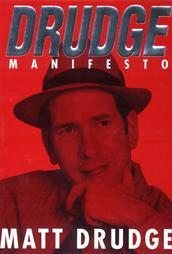
Classics of Conservatism - part VI - Drudge Manifesto

Click here for previous editions of "Classics of Conservatism".

Today's classic book recommendation is Matt Drudge's "Drudge Manifesto".


Even though the book is relatively recent, we can benefit enormously by reviewing the events that catapulted the "new media" into the national spotlight. Drudge provides not only the history of his own page, but also commentary on the state of the old media.

The headlines and reports that changed history forever in January 1998 are reprinted with background on how Drudge's scoop eventually spilled onto the pages of the MSM/DNC (even though that term did not exist then).

This book is not a rehash of the Monica investigation. "Drudge Manifesto" is an introduction to the new media, how it works, how it started and why it is necessary. It is a little outdated in that blogs were not common when the book was published (2000). But the particular avenues that the new media would eventually take are not as important as the underlying "new media" concept. The idea of instant communication that could bypass [and ultimately even label] the MSM/DNC was not taken for granted in January, 1998 the way it is today.

Today, Drudge's book can accomplish two goals:

1) It can provide perspective to those of us who use the new media. We can gain a better understanding of where it came from and where it is going. The new media remains in its infancy, despite all of the advances in the past couple of decades.

2) It can provide an introduction to the novice who has heard discussion of "bloggers" and internet news, but is more comfortable with books and doesn't want to surf the internet. "Drudge Manifesto" is a great way to spread the word about the new media without expecting old-fashioned types to venture beyond their comfort zone.

Drudge's writing style is a little odd, but the reader gets used to it very quickly.

This book insures that January 17, 1998 will be remembered along with July 4, 1988 and September 8, 2004 as critical dates in the history of the media revolution that we now experience.

Tuesday, January 31, 2006

Classics of Conservatism - part XV - Ludwig von Mises - Planned Chaos

Click here for a previous edition of "Classics of Conservatism.'

This month's book selection is short (90 pages) and powerful. In this small book, Planned Chaos, Professor von Mises describes how various government intervention programs become counterproductive and destroy the economic activity that they are intended to help.


Many years have passed since I found this book on a college library shelf, so I will rely on a Mises.org blurb:
The title comes from Mises's description of the reality of central planning and socialism, whether of the national variety (Nazism) or the international variety (communism). Rather than create an orderly society, the attempt to central plan has precisely the opposite effect. By short-circuiting the price mechanism and forcing people into economic lives contrary to their own chosing, central planning destroys the capital base and creates economic randomness that eventually ends in killing prosperity.


Of all of the Mises books, this one serves as the best introductory volume. Many of Mises' works are more complicated and rely on abstract economic theory. Planned Chaos reflects these themes, but with more focus on concrete political issues. All of Mises' works reflect much more depth than the spin one receives (from both sides) in modern political debate.


After reading Planned Chaos (or any of Mises' books), one obtains a thorough grounding in ultimate issues. This grounding provides us with stability and confidence as we become immune to the relative drivel that pours out of the mouths of modern leftists.

Labels: , , ,

Monday, March 12, 2007

Classics of Conservatism - Part XVIII - Dr. Meg Meeker - Strong Fathers, Strong Daughters

While I have neglected "Classics of Conservatism" for many months, it is never too late to start again.

Click here for a previous edition.

This month's classic book selection is Strong Fathers, Strong Daughters, by Dr. Meg Meeker. Dr. Meeker draws on her years of experience as a physician and counselor for families in crisis. In particular, Dr. Meeker has counseled many teenage girls suffering from eating disorders, sexually transmitted diseases, pregnancy, etc.

Dr. Meeker


The one unifying theme with most of the cases involving teenage girls is the girl's relationship with her father. Dr. Meeker draws the connection between strong, active fathers and strong, self-confident, safe, successful daughters. Dr. Meeker also draws the connection between weak, overindulgent, absentee fathers and daughters that end up in trouble.

Dr. Meeker explores such issues as eating disorders, teen pregnancy, infidelity among parents and STD's.

She relates the difference between Princesses and Pioneers - and how a father can make the difference between a daughter becoming one instead of the other.

Dr. Meeker makes the point that a strong father might not realize the effect of his parenting until some day when the daughter faces a crisis. If the father has shown strength, the daughter will call on him in her moment of trouble.

Most importantly, Dr. Meeker points out that a father does not need to change who he is in order to be a good father. A father does not need to become "sensitive" or "politically correct" or "in touch with his feminine side" etc. in order to raise his daughter effectively. Simply spending time, enforcing the rules and providing a good example will give his daughter the guidance and strength she needs.


The book is an easy read, with concrete advice mixed with numerous examples and anecdotes. The book is generally good news for anyone who has a daughter and has been anxious about raising her in a world that often preys upon children. As the book reminds us, the world is not child friendly. Popular culture tries to lure our children into sexual promiscuity without regard for consequences, into habits of reckless spending and away from God. But the solutions are much more basic and do-able than I ever imagined.

Labels: , , ,

Sunday, December 12, 2004

Classics of Conservatism - Book of the Month - part II - The People's Pottage

Today's book recommendation comes a little early in the month so as to allow time for Christmas.

We all know that the modern conservatives are great. Books by Ann Coulter and Sean Hannity have much to teach us. But as I said in my first "Book of the Month" post:

While I don't want to slight today's bestsellers, we have much to learn from the books that provided the roots and backbone of the modern conservative movement. Ronald Reagan and Rush Limbaugh didn't become conservative by listening to talk radio and surfing the internet. Their conservatism ran and runs deeper. Talk radio and the blogosphere are great, but the programs that appear in those media constitute only "entry level" conservatism.

Today's book influenced many years of conservative thinkers. The People's Pottage was published as three separate essays by Garet Garrett over 15 years. These essays were compiled into one book in 1954.

Garrett's thesis was that the New Deal constituted a revolution in the worst sense of the word. The New Deal forever changed government and a created a European style system where government was no longer bound by its original constraints. The consequences for our liberties and the soundness of our economics would be profound and long-lasting. We live with those consequences today.

Today, we take for granted the government's oppressive role in all of our lives, both economically and otherwise. Time has robbed us of our perspective. Reading Garrett will return that perspective to us so that we may understand where we came from and to where we are headed. Here is a typical passage:
There are those who still think they are holding the pass against a revolution that may be coming up the road. But they are gazing in the wrong direction. The revolution is behind them. It went by in the Night of Depression, singing songs to freedom.

This and other books will provide the deep philosophical basis for our conservatism and our opposition to the very government programs that will destroy our freedoms.

Despite being a deep and thoughtful work, The People's Pottage is an easy read, containing beautiful prose, concise history and thoughtful analogies. It will make you think without making you work.

The original edition hardback and later reprint paperbacks can be found here.

The 50 year anniversary edition is linked on the right.


My Garet Garret blog is here.


1954 edition


50 year anniversary edition

Sunday, September 25, 2005

One year blogiversary

I made it. I lasted a full year without getting tired of blogging.

One year ago today I tried to leave a comment at the Belmont Club. I had to register with Blogger to leave a comment. In the process of registering, I received a message that told me that I now have my own blog. I thought about it for about 5 seconds and figured I could find something to say once in a while that someone else might read.

As I wrote earlier, I had originally started reading blogs because of Rathergate:
Perhaps most importantly, the blogosphere grew by leaps and bounds as a result of that scandal. While I had begun to follow certain blogs as the election campaign wore on last summer, Rathergate was the hook that reeled me in. My own blog began at the end of September, 2004, as I joined in the wave that carries us to the new media future.

While I can take no credit for the blogburst that brought down Rather and CBS, I do claim to be a child of Rathergate. I suspect that all of those political blogs whose archives go back only to September and October, 2004 were similarly Rathergate generated.

A blog can serve as a summary of the history of any period that the blog covers. The past year has been quite "historical".

I immediately identified "Cassandra" and gave a hint as to topics I would like to cover in this blog.

I followed up with links to election fraud scandals in Wisconsin
- a recurring theme on this and other blogs over the following weeks. We all have written too little about this subject in the past 10 months.

On September 27th, I wrote of threats to the electoral college and what those threats meant to the integrity of U.S. elections.

On October 4th, I wrote of Saddam Hussein's WMD's and Al Qaeda connections.

On October 5th, I wrote of the Democrats' use of campaign violence as a tactic. Now would be a good time to deal with this issue instead of waiting until the next election. Updates were provide on October 6th and October 7th, with parallels to ancient Rome included.

On October 8th, I commented on the ABC internal memo that counseled employees not to hold both sides in the election equally accountable.

On October 9th, I linked to a story of Islamic attempts to get in on the voter fraud racket and Islamic terrorist blueprints for various schools in the U.S.

On October 11th, I noted election violence in Washington State and elsewhere.

On October 12th, I linked to a story describing the Islamic fetish for beheading videos and the meaning of Kerry's positions on the war in the face of such an enemy.

Also - more Democrat inspired campaign violence, from Alaska to Washington to California.

October 13 - 25 Chechen terrorists may have entered the U.S. through Mexico.

October 14 - "KERRY/EDWARDS ELECTION DIRECTIVE: CHARGE VOTER INTIMIDATION, EVEN IF NONE EXISTS!"


Also - Voter fraud in Colorado and Pennsylvania - and the failure of government's price control/flu vaccine program.

And - an Ohio judge allows voters to vote at the wrong polling place.

October 16 - more flu vaccine rationing consequences and violence.

October 17 - voter fraud in Florida - absentee ballot irregularities.

October 18 - Chinese troops in Haiti.

And - the Ohio crack for votes program.

And - Iraqi WMD's in Syria?

October 19, 2004 - more voters than people in Philadelphia.

October 20 - Ohio vote fraud here and nationwide vote fraud here.

October 23 - More election violence.

Plus - election officials register a Somali terrorist in Ohio.

A link to the Stolen Honor video.

October 25 - The Final Week - I discuss voter fraud, terrorist attacks and the Democrats' October Surprise.

October 25 and 26. The Al Qaqaa phase of the October Surprise.

On October 27, I noted the Pennsylvania Governor's suppression of the military vote.

And - ABC holds back a terror warning.

Election fraud regarding illegal aliens in Wisconsin and victimization of senior citizens in Pennsylvania.

The Iraq-Russia-Syria connection.

October 28 - a strategy for combating fraud.

October 29 - A call for election day volunteers.

October 30 - Osama and the second half of the October Surprise.

And - Terrorists Support Kerry.

October 30 - John Kerry's letters to Wallace Carter.

Also - the final 2 1/2 days - a simple strategy.

November 1 - election eve.

November 2 - voter fraud in Philadelphia on election day.

November 3 - dodging the bullet.

November 4 - Arlen Specter's backstabbing. More on Specter on November 7.

November 9 - the next terror attack - crop dusters and propane cylinders.

November 10 - scorecard on Specter.

Also - I commented on how to be prepared for last minute false exit polls.

On November 11 - I made it onto one of the Commissar's maps.

November 12 - Arafat post-mortem.

November 13 - prosecute the fraudulent voters.

On November 18, I commented on the Islamicization of Europe prosecuting fraudulent voters a North Korean leadership mystery, and the growing Iranian threat.

On November 20, I began the Book-of-the-month recommendation (later to be called "Classics of Conservatism."

On November 23, I noted Hillary's attempt to triangulate the immigration issue. I note now that Republicans have done nothing to improve their position on this issue since that time.

On November 24, I commented on increasing Islamic influence in public schools.

Also - I summarized the case against the U.N.

On November 25, I posted the first of many posts about the Washington State fraudulent elections. This topic would take up much space for many bloggers over the next few months.

Also, a Democrat congresswoman admits that "the media certainly is not in our hands any longer."

On November 28, I noted a comparison between carousel voting in the U.S. and the Ukraine.

On December 3, I noted growing opposition to the UN.

On December 5, I commented on the leftists attempts to rig the blogger awards.

On December 6, I quoted several sources on the Intel bill sham.

Also - union opposition to anti-terror measures for schools.

December 8 - WMD's in Iraq.

On December 11, I noted the Netherlands Exodus.

On December 14, I finished in 8th place in the Weblog awards.

On December 17, I noted a connection between the secularization of Christmas and Islamic terror.

On December 26, I summarized the top election outrages of 2004.

On January 1, 2005, I tried to note blogosphere trends for the coming year.

On January 2, I commented on Wizbang's reference to the "Chamberpot defense." Also - my first use of "MSM/DNC".

On January 7, I commented on some good Rathergate summaries.

On January 10, I commented on the CBS "independant" panel report on Rathergate.

On January 14, I commented on the election fraud crisis in this country.

Also - I began the list of MSM lies of 2005. Work continues on that list.

January 24 - another Washington State election fraud post.

January 30 - waiting for the MSM spin on the Iraqi elections.

January 31 - MSM/DNC - a singular noun. I am gratified to see this term in use somewhat around the blogosphere over the past 8 months.

Also - concrete consequences from immigration.

February 2 - terrorists kidnap a G.I. Joe doll. G.I. Joe is rescued by the Ann Coulter doll.

Also - conservative talk radio has a deep bench.

February 3 - Social Security "privatization"?

February 12 - Easongate.

February 13 - the blogosphere needs to write more about economics.

February 14 - Watergate, Deep Throat and beating the dead horse.

February 15 - General Pershing's solution for terrorism.

February 16 - Ayn Rand, Garet Garrett and Absalom Weaver.

February 17 - my first of many posts on Terry Schiavo.

March 5 - The first of many quotes of the day. I have included a new quote every day since then.

March 6 - I quoted Nelson Ascher and the "Berlin Wall's Orphans".

On March 7, I noted AP's Sgrena lie.

On March 8, I noted the euphemism "failure to authenticate" as an MSM/DNC fig leaf for Rathergate.

March 9 - the first of many Axis Sally posts and comparisons to modern day leftists.

On March 10, I commented on Dan Rather's farewell appearance, and made the following comment:
LGF's post has encouraged me to create a more comprehensive post that categorizes the MSM/DNC tactics into several genres. I think this will help us understand what we face every day in the MSM/DNC and help further the new media revolution. If Rather's career is to serve any good purpose, it will be as fertilizer with which we can create a deeper understanding of the MSM/DNC machine that he so loyally served for almost five decades.
emphasis added


On March 17, I noted the push to adopt the Law of the Sea Treaty and its dangerous consequences.

On March 28, I noted Roger Ebert's efforts on behalf of a terrorist.

On April 1, we learned that Chris Matthews has no soul.

On April 2, 2005, I posted the categories of MSM/DNC bias. This post resulted in my first "Instalanche" a day later.

April 6 - I described some of the results of my "category" post.

April 8 - I noted a Peggy Noonan column summarizing John Paul II's greatest legacy.

April 10 - polls are meaningless.

April 18 - Time Magazine, Ann Coulter and Robert Ringer.

April 19 - I described the MSM/DNC attacks on Pope Benedict XVI.

On April 24, I exposed the historical fallacies about Joe McCarthy.

On May 2, I wrote one of my favorite posts on the leftist use of the "hagfish."

I also (sort of) defended the runaway bride.

And also don't forget the North Korean missiles and who was President when N. Korea acquired the technology.

On May 4, I mentioned the Dishonor Awards and MSM/DNC's home run strategy.

On May 7, I noted some movies related to Islam and history.

On May 12, I commented on the changing language, including use of the term "reinvent."

May 15 - the Newsweek - toiletgate story began.

May 20 - Encirclement from without - demoralization from within

On May 23, I commented on the filibuster cave-in. We don't yet know how much damage that deal will do.

On May 24, I noted John McCain's history of sellouts.

I also wrote about Patty Hearst and today's left.

On May 25th, I took note of a Debbie Schlussel column detailing Oprah's whitewashing of terrorists.

On May 27, I noted that Hillary got away with another campaign finance violation.

On May 28, I compared the Star Wars series with our own history of drifting toward empire.

On May 29, I celebrated France's vote against the EU constitution.

On May 30, I noted an ironic anniversary involving Joan of Arc.

On June 4, I noted the State Department's much ignored "Trafficing in Persons" report.

I also commented on a change in attitude since 9-11.

On June 9, I compared the blogosphere to a historical archeology mission.

On June 10, I wrote that we cannot survive another Clinton Presidency.

On June 11, I began the 90 day Rathergate anniversary countdown. Over the next three months, I would make the point, in various posts, as to why Rathergate was the defining moment for the modern mass media.

June 12 - Mark Steyn - the Chinese Century?

I also commented on Ed Klein's book, the Truth about Hillary.

One June 13, I posted the definitive article about the Clinton's China scandal.

June 14 - more thoughts on Ed Klein's book and why we don't need to defend the Clintons.

On June 15, I generated some heavy comments from the ESPN chat rooms as I repeated an e-mail from a WNBA ass't. coach to Debbie Schlussel.

On June 23, I tried to make sense out of the Supreme Court's Kelo decision.

I also praised Karl Rove for his comments on leftists and 9-11.

On June 26, I noted Peggy Noonan's reference to Hillary Clinton's Rosetta Stone.

On June 29, I commented on the Chinese military buildup.

On July 2, I presented a strategy for fighting the Supreme Court battle. That strategy applies even more today.

On July 4, I used Justice Janice Rogers Brown for the quote of the day for the first time.

On July 7th, I discussed the London attacks in terms of the immigration issue.

July 11 - the left's Supreme Court strategy.

On July 15, we saw a map of Islam in Africa.

July 18 - a sad anniversary.

Also - bomb the Kaaba stone?

On July 19, I speculated on the possibility of a Clement nomination here and here.

On July 20, I began to worry about Judge Roberts after previously expressing contentment.

On July 21, I wrote about moderate Muslims and Mecca.

On July 25, I noted Rick Santorum's new book.

On August 3, I noted an article that commented on the true meaning of Islam.

On August 6, I discussed the Hiroshima anniversary in a post that listed my other WWII anniversary posts also.

On August 7, I noted the anniversary of the 1998 embassy bombings.

On August 10, I took note of Democrat/election type math used to compute payments for hurricane victim funerals.

On August 13, I placed Jamie Gorelick's memo in the proper context.

On August 14, I wrote of my own roots with the blogosphere.

Also, I discussed the Gaza pullout in light of a 45 year old passage from the cold war.

I also commented on Able Danger.

August 16 - Open. War.

August 17 - The Chinese aircraft carrier Varyag

August 22 - USS Iowa shunned by San Francisco.

On August 30, I wrote of the freezing of Palestinian assets in the U.S.

- and looting.

September 1 - I wrote on looting and its significance in the context of the welfare state.

And I welcomed Sue Bob as my first ever guest blogger.

On September 3, Sue Bob wrote of Air America's encouragement to looters. [The New Orleans looters, not the thieves who robbed the orphans and diverted the funds to Air America.]

On September 6, Sue Bob commented on history and the need for context.

On September 8, I commented on Rathergate's anniversary.

I also linked to each of the Rathergate anniversary posts from the previous 90 days.

On September 11, I commented on the Islamist slanted memorial that was planned for the flight 93 heroes.

On September 18, I quoted from Thomas Sowell's thoughts on the Bork confirmation process in 1987.

I also recalled Bill Clinton's FEMA failure.

September 24 - Price controls cause shortages.

And - the future of New Orleans.

The past year has undoubtedly been good for the blogosphere. We should remember what we are capable of when we face the challenges of the future.

Labels: ,

  • People's Pottage - permalink
  • Economics in One Lesson - permalink
  • Why Johnny Can't Read- permalink
  • Locations of visitors to this page